In 1466, Primo Paganini—Dara’s teacher, mentor and friend—was apprenticed to a harpsichord maker in Venice. When he arrived in that flourishing city from his mountain village far to the north, it was already the largest and most important in Europe. Built on a cluster of islands and adjoining marshlands on Italy’s northeast coast, Venice in its early years provided refuge for people fleeing the barbarian invasions that followed the barbaria conquest of Rome. Over time, the city grew from a rural outpost to become the powerful commercial and artistic center he discovered as a young man.
How powerful was Venice? By the fifteenth century, the city’s merchant fleet of more than a thousand ships, flying the city’s flag, which bore the winged lion of Saint Mark, sailed the eastern Mediterranean and Venetian forts and commercial outposts dotted its shores. Venetian merchants sold grain and salt (essential for preserving food before refrigeration) to the Near East and imported gems, silks, and spices like cloves and pepper from Asia that fetched high prices in Europe. Venetian ships dominated the western terminus of the Silk Roads that stretched as far as China and along which luxury goods passed from East to West and from West to East.
Trade made the city rich. By the time Primo Paganini arrived, Venice was already home to opulent palaces, soaring churches, teeming markets, and bustling shipyards. But most amazing of all were the canals! Venice seemed to float on water. To a boy raised in the mountains, this seemed impossible. What kept its stone buildings from sinking into the lagoon? The answer, he learned, was millions of tree trunks, many as thick as telephone poles, driven deep into the marshy soil of the Venetian lagoon. A city supported on foundations of wood? Hard to believe, but true.



But Venetian life did not revolve around commerce alone. Glassmakers on the adjacent island of Murano produced the finest colored glass in Europe; shipwrights in the so-called Arsenal built war galleys and stout merchant vessels to serve the needs of both defense and trade. The gold mosaics in the Basilica of Saint Mark were renowned for their beauty, and the four bronze horses that adorned the façade of the basilica, looted from its rival city Constantinople to the east, testified to the city’s political reach. Venetians were not shy about displaying their wealth.
La Serenissima, or “Most Serene,” as Venetians called their republic, was ruled by an aristocracy of the richest and oldest families, who together elected the “Doge” or ruler at the head of the city’s government. His imposing palace with its many columns stood on the Grand Canal beside Saint Mark’s Square. But the Doge did not rule alone. Other bodies—the Great Council, the Minor Council, the Council of Forty, the Council of Ten, and the Senate all shared responsibility for what was for the time a remarkably democratic government.
Venetian love of beauty and support for the arts drew painters and musicians from all over Italy, eager to make this wealthy city their home. Artists famous today, such as Titian and Paolo Veronese, painted sumptuous canvases for aristocratic patrons and elaborate altarpieces for the city’s churches, while composers like Giovanni Gabrielli and Claudio Monteverdi created wonderful music, including the world’s first operas, some still performed today. Mr. Paganini studied with Monteverdi and became his star pupil.
Thanks in part to its music, Venice was also a city of pomp and pageantry. Religious processions celebrated feast days to the sound of brass instruments and choral song as they made their way around Saint Mark’s Square in the city center. Other city squares and outdoor spaces hosted concerts and street theater. And every year a magnificent ceremony celebrated the city’s “marriage to the sea,” during which the Doge proceeded in a splendid golden barge out into the Adriatic and “married” the sea by throwing a golden ring into the waters.
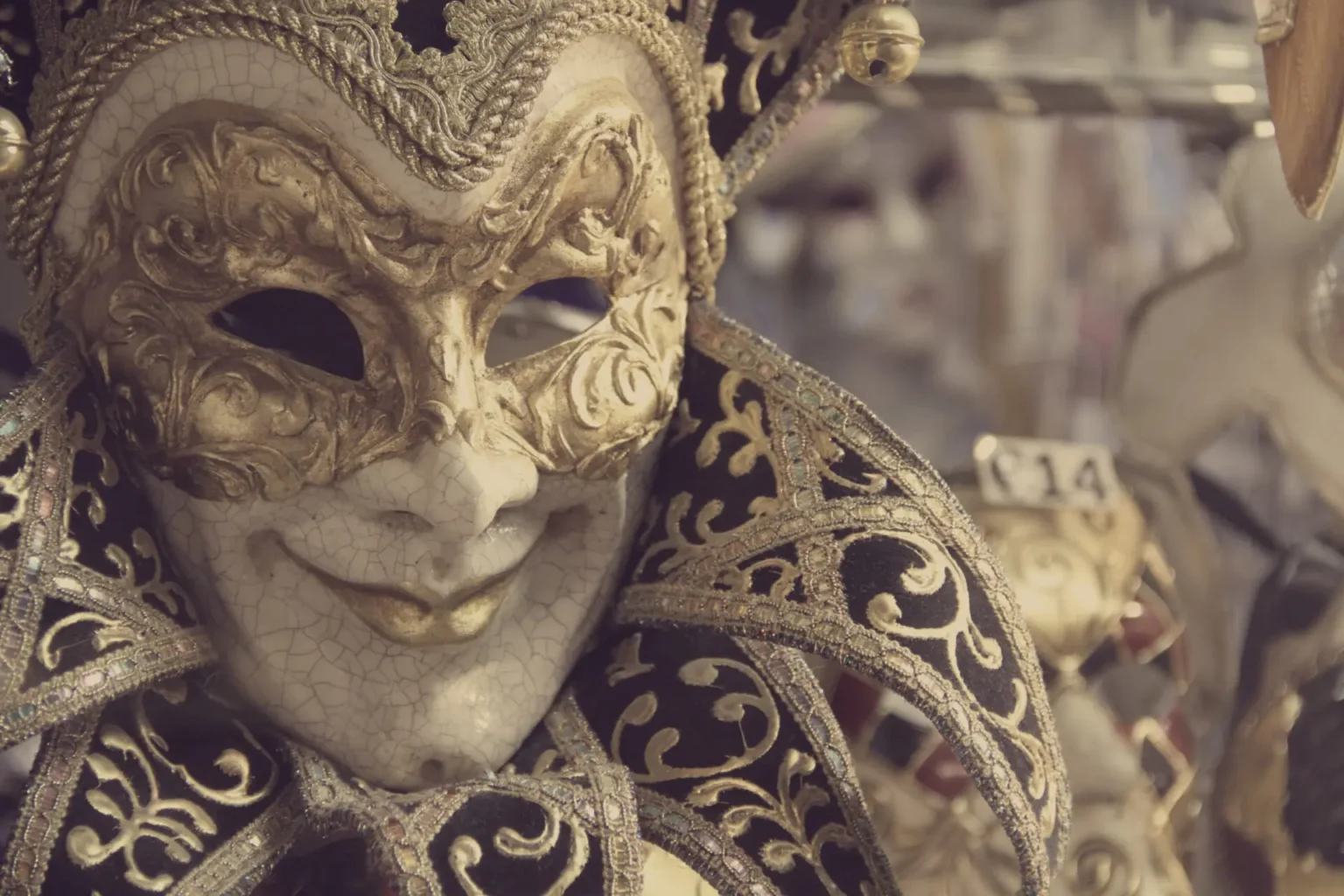
But with the 16th century Age of Discovery, when Columbus and others opened up new trade routes to the East that bypassed Venice altogether, the city’s fortunes fell. As its power and wealth declined, the theatrical side of Venetian culture grew in importance, exemplified by the masked balls of Carnaval season that attracted many thousands of visitors from other parts of Italy and abroad. Venice thus came to resemble a giant stage set, hosting elaborate performances of all kinds. No longer the commercial center of the eastern Mediterranean, it remained true to its vocation as a city of pleasure and art.
Today much of this ancient city remains as it appeared when Primo Paganini fell under the spell of its palaces, churches, and canals, its pageantry, music, and art—an improbably beautiful urban center rising above a hidden forest, poised between land and sea. Gazing at the palaces that still line the Grand Canal and the sumptuous gold mosaics that decorate Saint Mark’s Basilica, Dara herself relived the wonder that Primo Paganini felt when he first laid eyes on them five centuries ago.